

White Paper
The Intelligence Gap: Why AI in Legal Isn’t Delivering and What Needs to Change
This report examines why AI in legal is widely deployed but not yet delivering.
White Paper
Most legal departments are already piloting or implementing GenAI, but many still lack a clear strategy. This guide breaks down three practical approaches to adoption, with tips, data, and recommended next steps for each — helping legal teams at any maturity level build a framework for integrating GenAI into daily workflows and scaling with confidence.
Discover how Generative Artificial Intelligence (GenAI) can revolutionize legal operations with actionable insights and best practices in our latest whitepaper, “A Practical Guide to GenAI Solutions for Legal Teams.”
This whitepaper provides actionable insights into how legal teams can start or accelerate their GenAI journey with both tactical and strategic insights.
According to recent Morae survey, 3 in 5 legal departments report that their organizations either already have implemented Generative AI or are currently piloting solutions. 1 in 5 even reported a relatively advanced maturity level for their organization’s Generative AI strategy, including a full steering committee, defined roadmap and KPIs set for 2025. But then, 1 in 10 reported their organizations have no current initiatives, strategy or planning for the adoption of Generative AI. No matter where your organization is in terms of GenAI adoption maturity, it’s not too late to get started.
Whether you are leading your GenAI initiatives or are part of the project team—this whitepaper will provide you with a solid framework for the various options in the market and how they can best enable you and your team to embrace the power of GenAI.
Morae research with 850 senior legal leaders shows the problem is implementation, not the technology. Fragmented data, weak governance and heavy human correction consume the efficiency gains AI was meant to deliver.
The verification tax is the cost of humans checking and reworking AI outputs. In the 2026 AI in Legal Report, 67% of legal leaders fear this cost outweighs the benefits of AI and 48% must materially change outputs before use.
Unified Legal Intelligence is a legal function in which AI is contextually aware, works across the whole legal function, produces decision ready outputs and compounds in value as data and context accumulate.
White Paper
This report examines why AI in legal is widely deployed but not yet delivering.
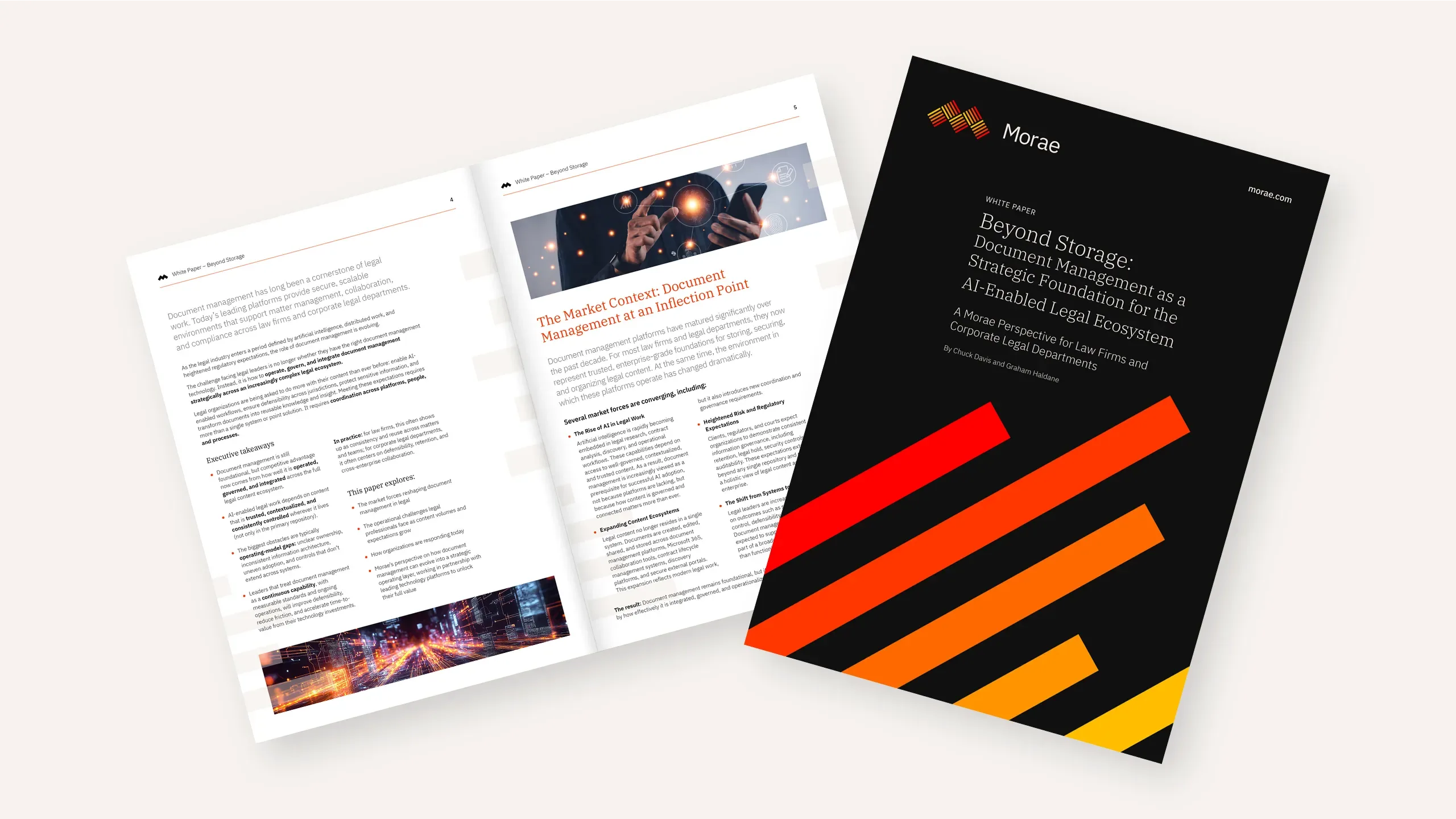
White Paper
Why document management must evolve into a governed, integrated layer enabling AI and legal value.
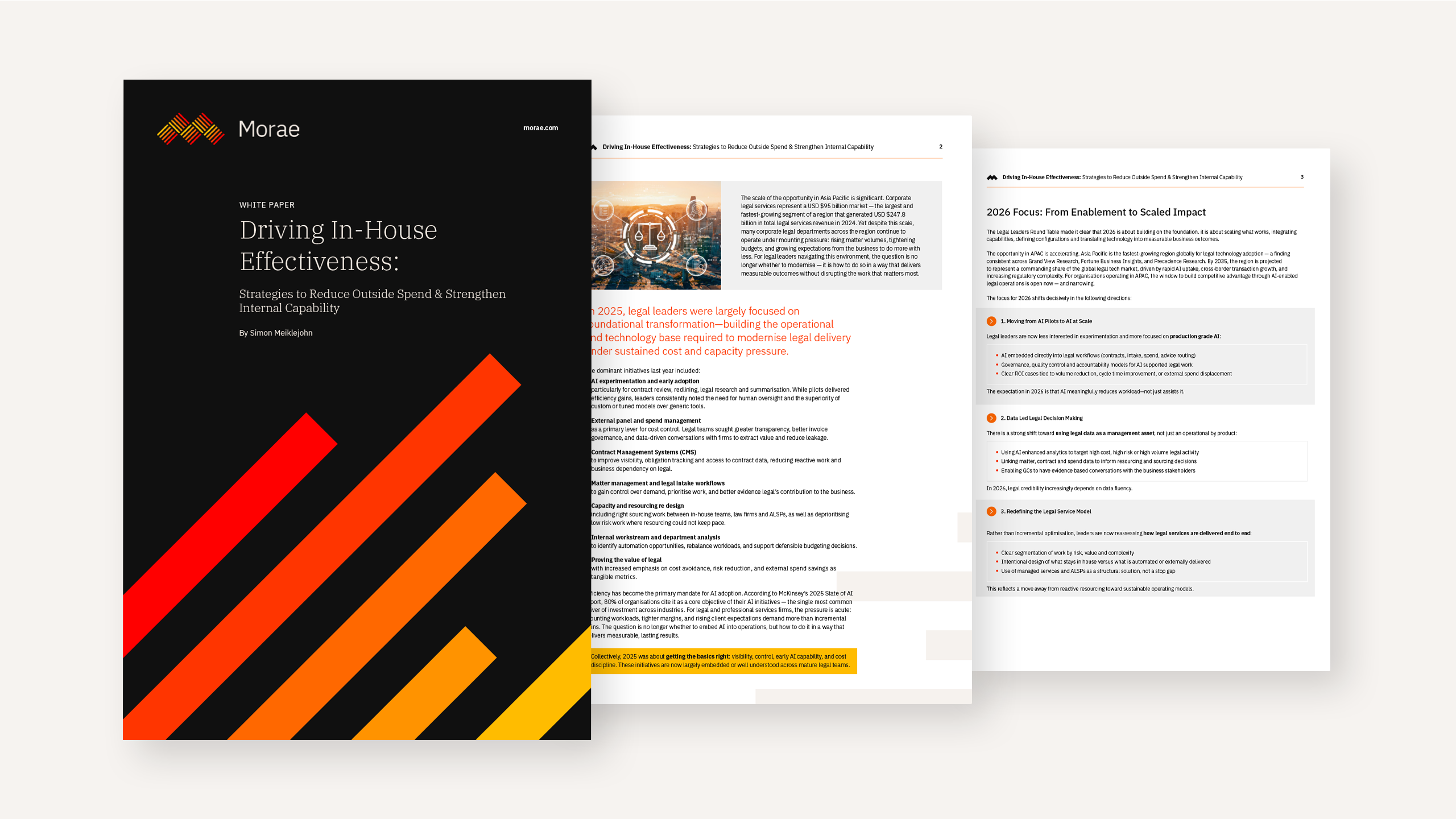
White Paper
Strategies for legal teams to cut external costs and scale in-house capability with AI and data.

White Paper
Legacy case management systems come with hidden costs that impact efficiency, compliance, and scalability.

White Paper
Discover how to move from policies to practice—and make compliance a shared mindset across your organization.
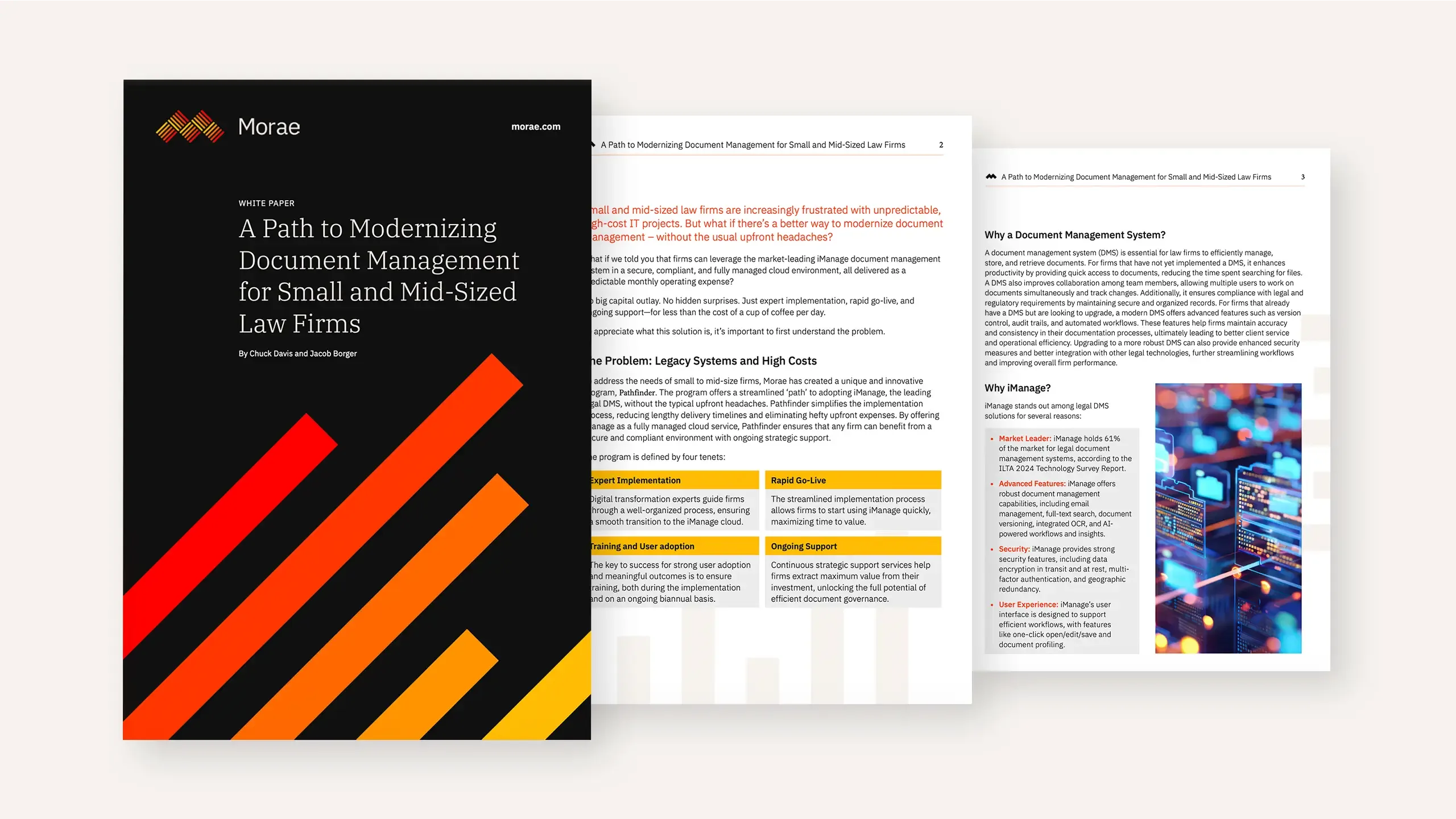
White Paper
Implementing the iManage document management system in a secure, compliant and fully managed cloud environment
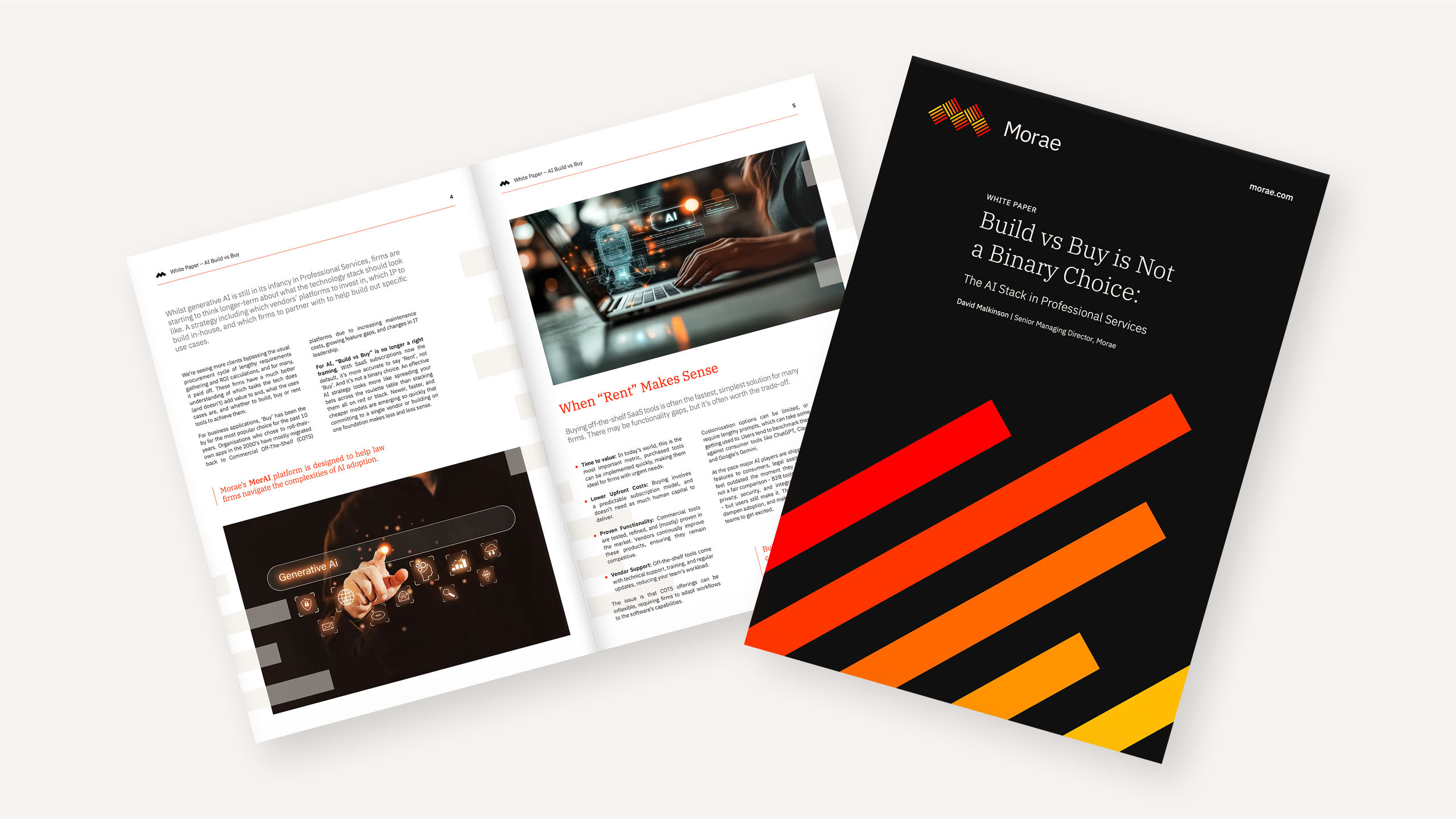
White Paper
Firms increasingly face a pivotal decision—should they build their own AI solutions or buy them off the shelf?

White Paper
Learn how we helped cut client costs by 75% and meets a one-week deadline with Relativity aiR for review