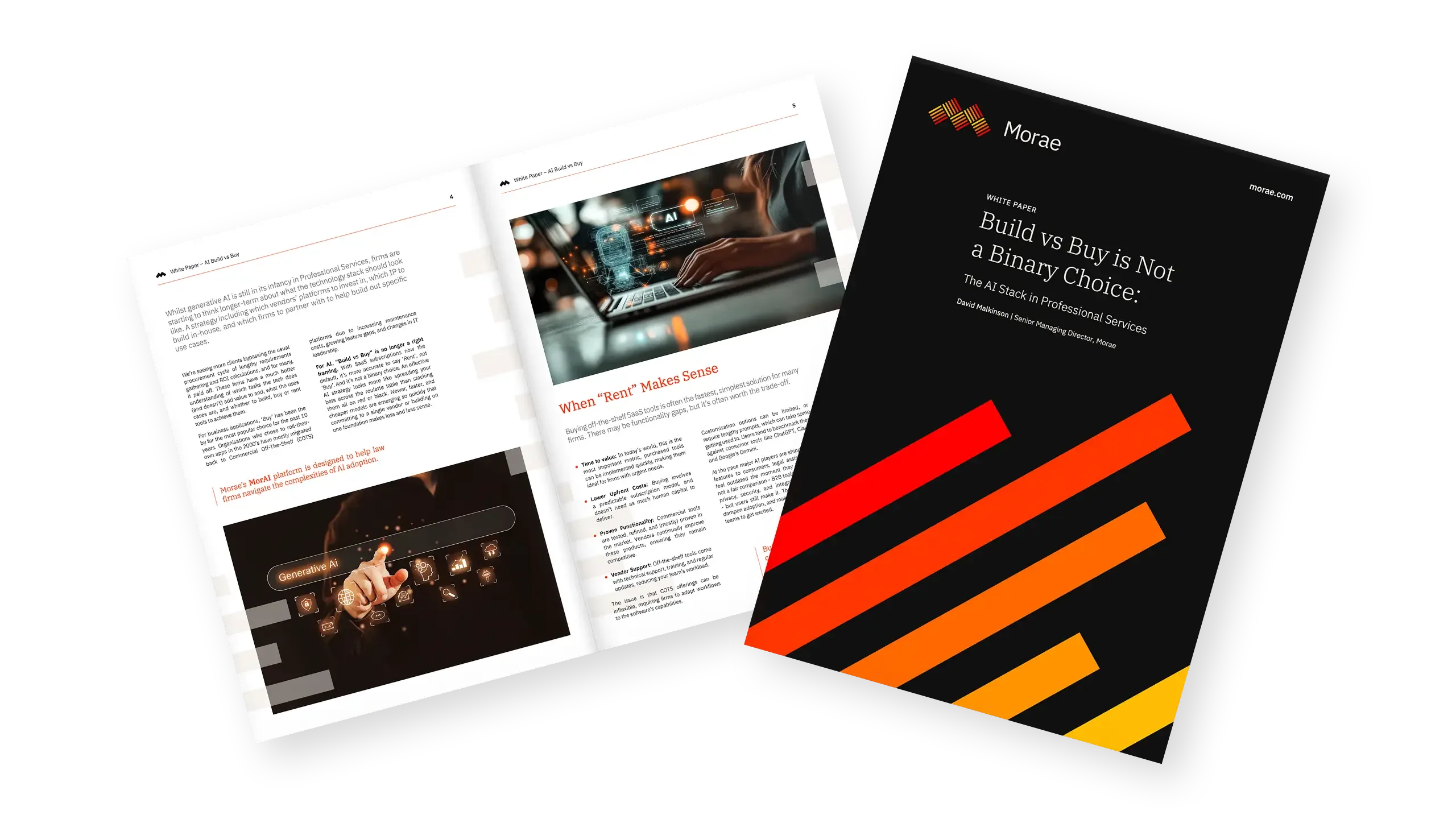

White Paper
The Intelligence Gap: Why AI in Legal Isn’t Delivering and What Needs to Change
This report examines why AI in legal is widely deployed but not yet delivering.
White Paper
As firms increasingly recognize the transformative potential of AI, they face a pivotal decision: should they build their own AI solutions or buy them off the shelf? This whitepaper, authored by Morae’s David Malkinson, dives deep into this critical choice, offering insights that will help you navigate the complexities of AI adoption.
Discover how leading firms are bypassing traditional procurement cycles to achieve faster, more effective AI integration, and learn why the decision to build or buy is not as straightforward as it seems.
Whether you’re looking to innovate or optimize, this whitepaper will equip you with the knowledge to make informed, strategic decisions that align with your firm’s goals and capabilities.
The decision to build or buy AI solutions is crucial for firms looking to leverage AI effectively. This whitepaper provides insights into the factors that influence this decision, including cost, time to value, and the need for customization.
Don’t miss out on this valuable resource.
Morae research with 850 senior legal leaders shows the problem is implementation, not the technology. Fragmented data, weak governance and heavy human correction consume the efficiency gains AI was meant to deliver.
The verification tax is the cost of humans checking and reworking AI outputs. In the 2026 AI in Legal Report, 67% of legal leaders fear this cost outweighs the benefits of AI and 48% must materially change outputs before use.
Unified Legal Intelligence is a legal function in which AI is contextually aware, works across the whole legal function, produces decision ready outputs and compounds in value as data and context accumulate.
White Paper
This report examines why AI in legal is widely deployed but not yet delivering.
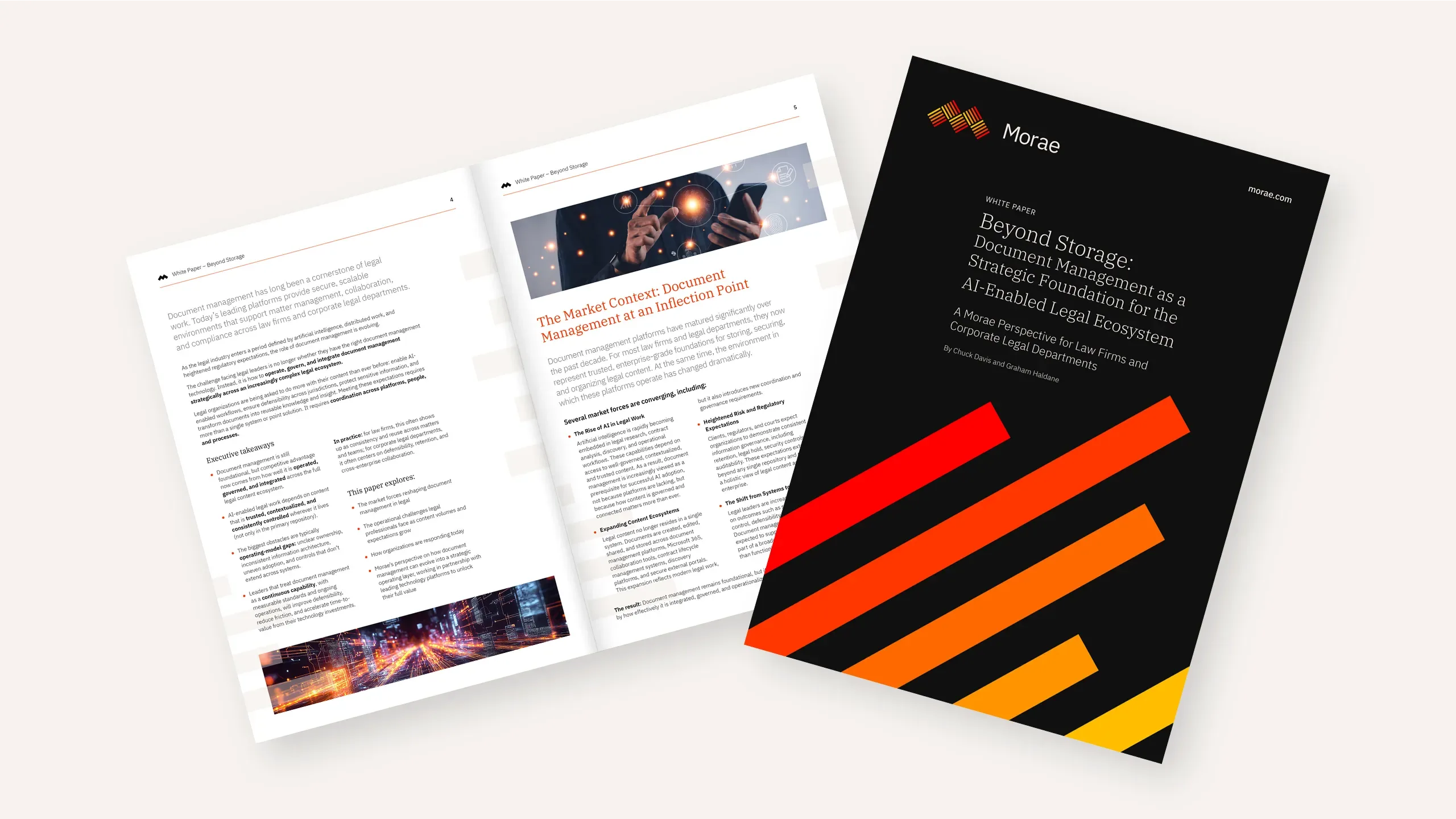
White Paper
Why document management must evolve into a governed, integrated layer enabling AI and legal value.
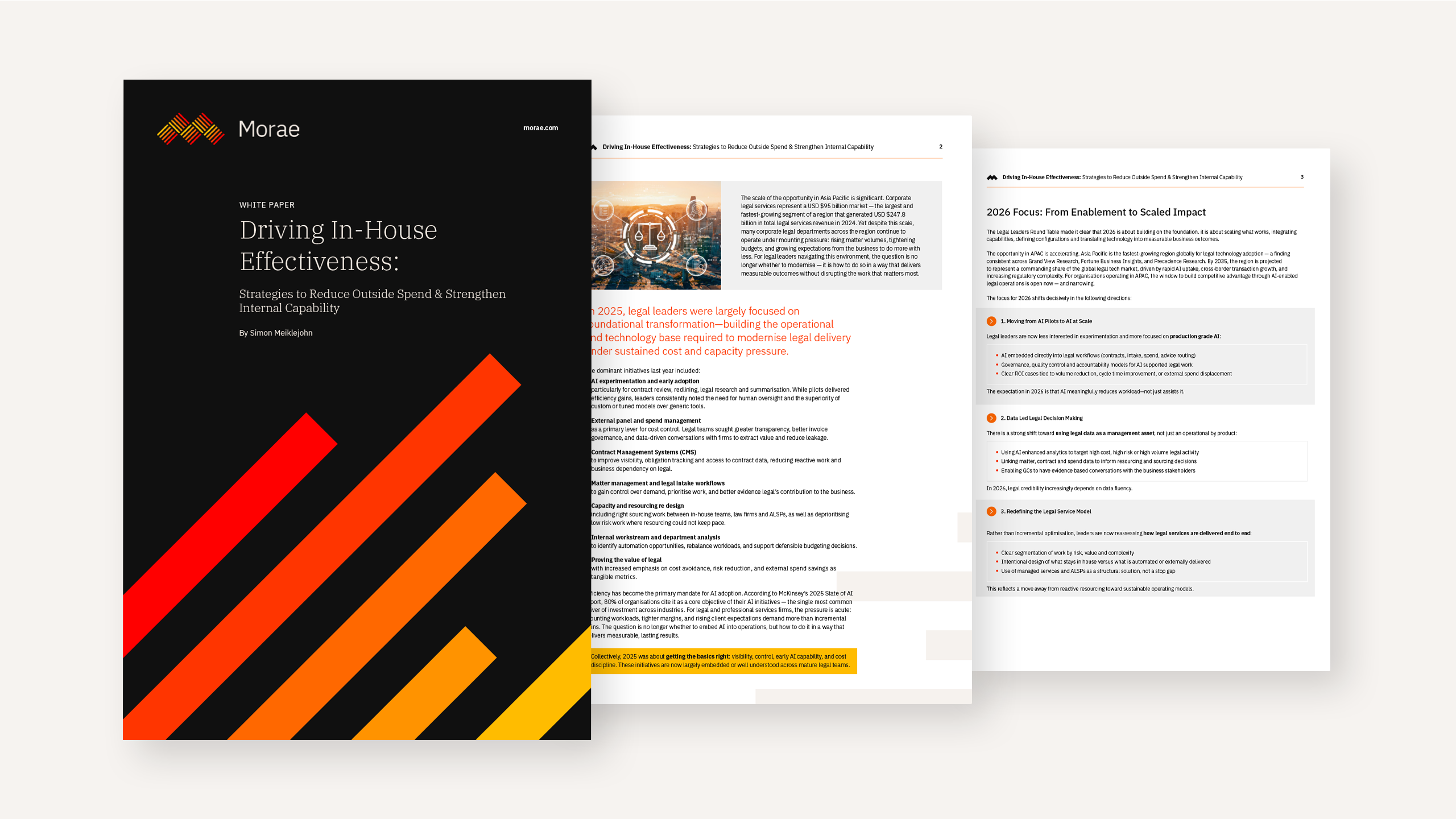
White Paper
Strategies for legal teams to cut external costs and scale in-house capability with AI and data.
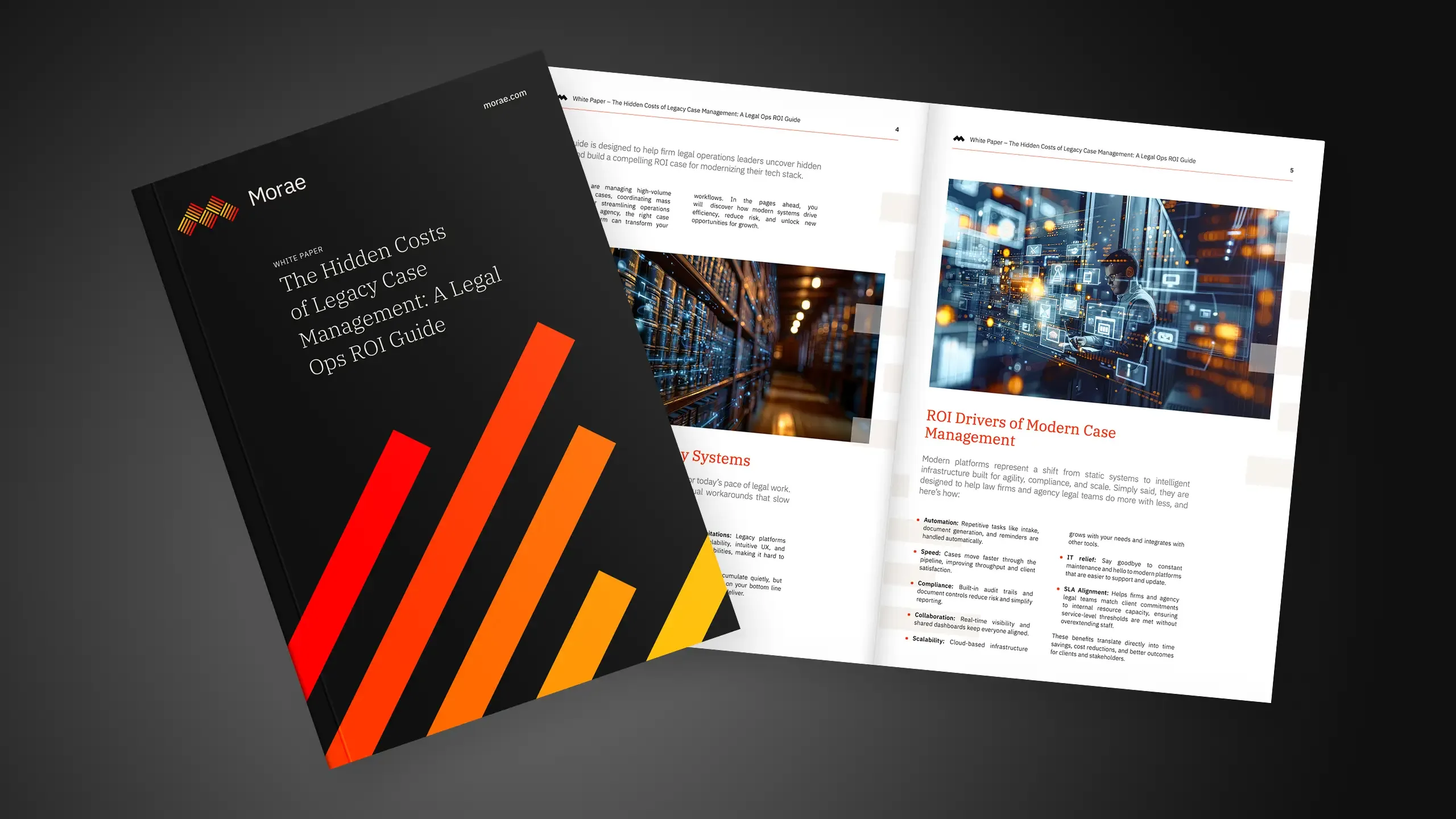
White Paper
Legacy case management systems come with hidden costs that impact efficiency, compliance, and scalability.
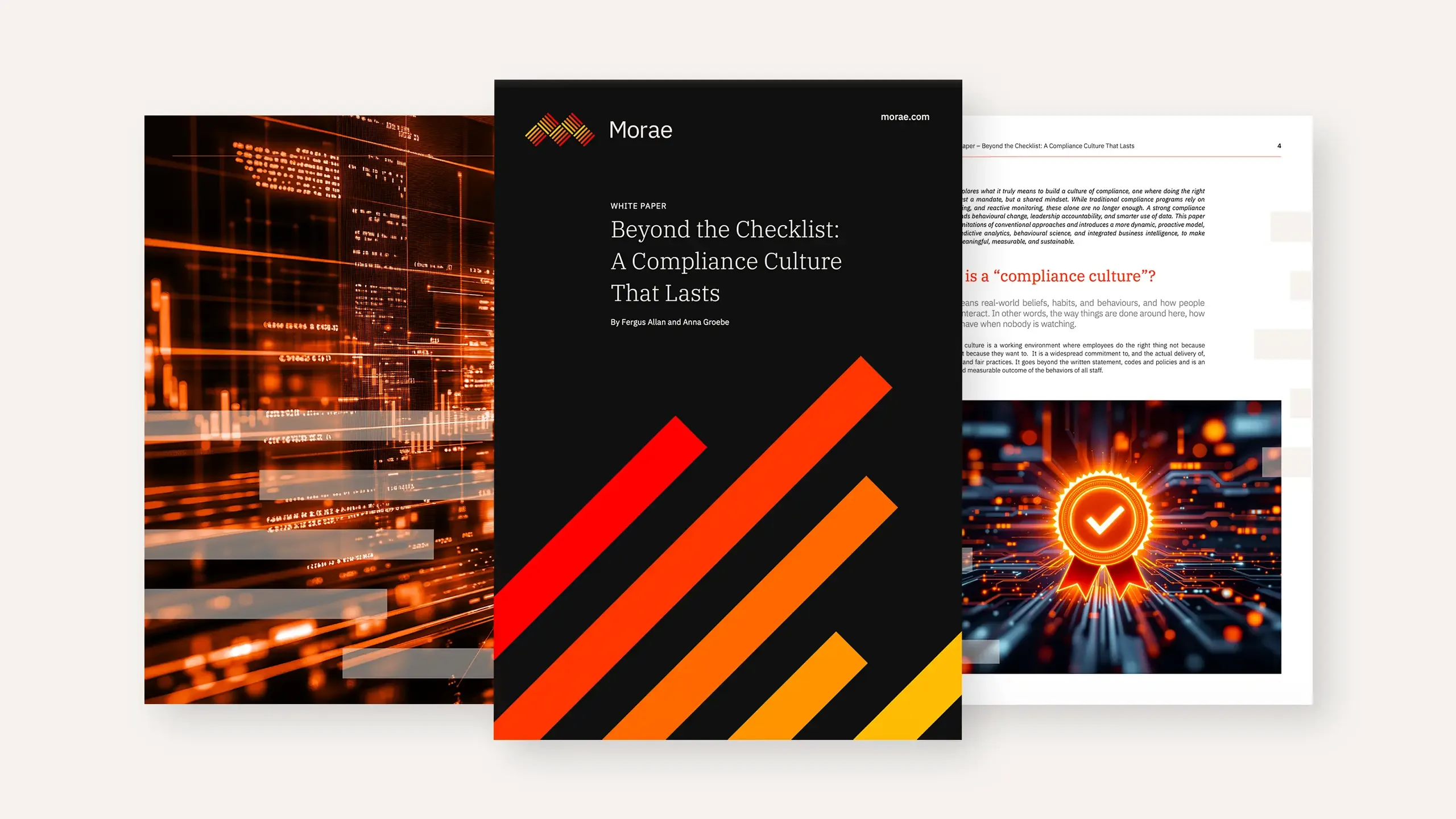
White Paper
Discover how to move from policies to practice—and make compliance a shared mindset across your organization.
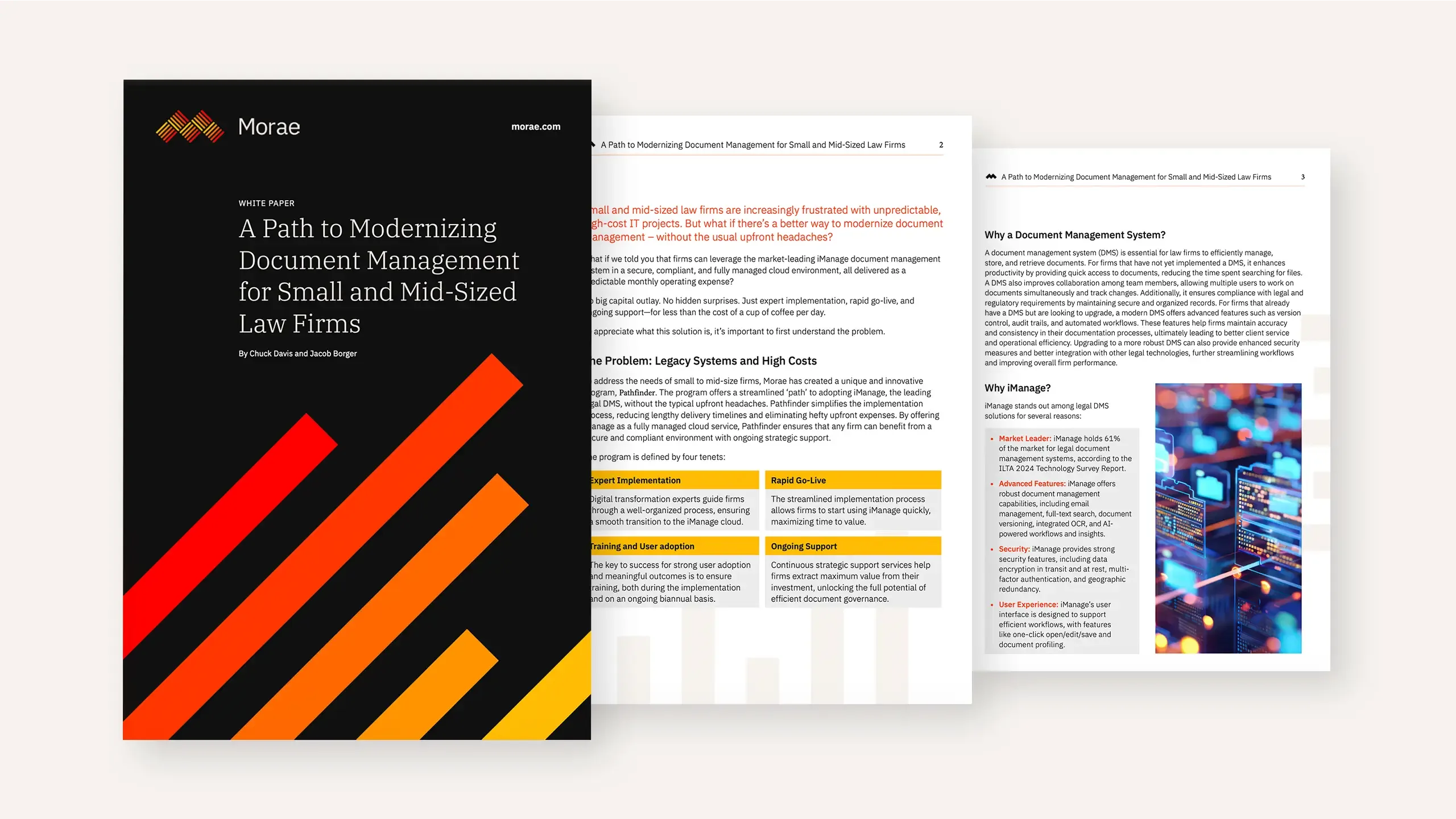
White Paper
Implementing the iManage document management system in a secure, compliant and fully managed cloud environment
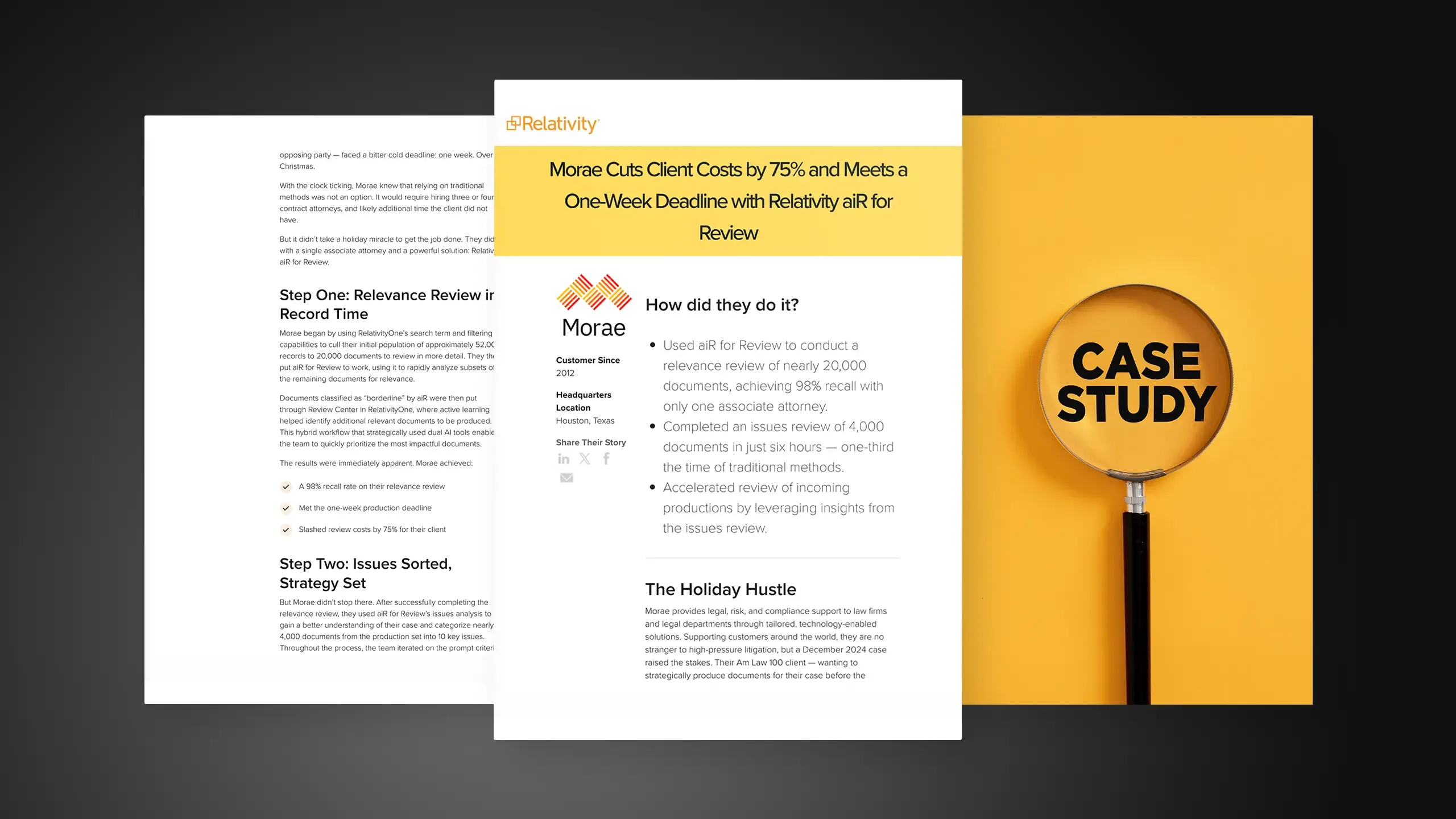
White Paper
Learn how we helped cut client costs by 75% and meets a one-week deadline with Relativity aiR for review

White Paper
Legal leaders' top 2025 priorities: AI adoption, spend management, and balancing innovation with integrity.